Heat transfer oils in industrial processes have always been associated with very high heat production. To function properly, we need a variety of heating and cooling systems. Water and water vapor are the most common materials used in heat transfer systems. However, at temperatures above 200 degrees Celsius, water can no longer have good heat transfer properties and quickly loses its thermal capacity.
In this case, water must be used under pressure, which requires the use of a huge amount of systems and monitoring equipment in order to constantly monitor the system. In addition, water causes corrosion in pipes and other components, which in itself is a major defect.
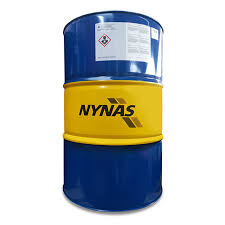
Product Images
heat transfer oil
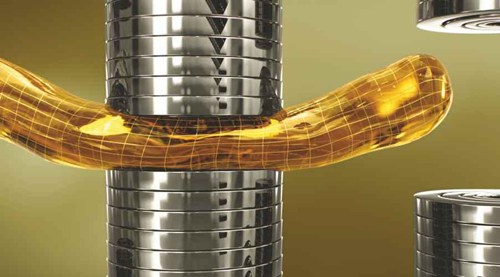
One of the best materials that can be used to solve the problems mentioned in the previous paragraphs is the use of heat transfer oil.
Temperature range of heat transfer oil
Chemical- or mineral-based heat transfer oils are a very suitable alternative to water. These oils are suitable for temperatures between 200 and 400 degrees Celsius, and one of their main advantages is that they do not need to be pressurized up to 350 degrees Celsius.
Characteristics of heat transfer oil
Depending on the application expected from the heat transfer oil, these compounds should have different properties and specifications. Some of the most important properties that can be named for heat transfer oils are: proper viscosity, high thermal stability, high flash point, good heat transfer properties and ease of waste disposal.
These oils should be non-corrosive, non-toxic and non-flammable. Of course, it is an undeniable fact that none of the heat transfer oils can have all the above characteristics in the best possible condition. So we must choose the best heat transfer oil based on our desired system.
One of these characteristics of relatively low viscosity and suitable for oil especially at low temperatures is the range of oil performance because this property directly affects the lowest temperature at which the system can start working. This is especially important when the system is in an open environment and there is no auxiliary heating device.
The viscosity of the oil transfers heat
The viscosity of the oil determines the flow characteristics within the pipes, which is directly related to the degree of corrosion of the pipes. Proper viscosity and having turbulent flow in the pipes causes the best heat transfer within the system. The thermal stability of the oil is another important parameter that plays an important role in the oil pumping system and the safe operation of the heat transfer system.
Heat transfer oils are usually a combination of different components, so the components in the oil that have a low melting point evaporate during the operation of the heat transfer system and must be removed from the oil because they significantly affect the key characteristics of the heat transfer oil. These substances cause a decrease in viscosity and a decrease in the oil’s flash point temperature at high temperatures.
If the temperature of the heat transfer system continues to increase, the compounds with high melting points begin to decompose and break down. In this case, new compounds with high viscosity are formed within the oil, causing coke-like and gel-like deposits inside the pipes and the heat transfer system.
Finally, the main characteristics of heat transfer oils are listed on a case-by-case basis:
- high viscosity – high viscosity retention means that temperature changes do not have much effect on viscosity.
- thermal stability and resistance to oxidation – thus at high temperatures, sediment, sludge and polymeric compounds do not form in the oil.
- low ferritin – the lower the ferritin, the less the oil evaporates and the system suffers less corrosion.
- high flash point temperature
The general characteristics of heat transfer oil as mentioned during the above discussion can be summarized as follows:
- non-toxic and odorless
- compatible with system components
- non-corrosive in the system
- good resistance to water reactivity
- low vapor pressure at high temperatures
- high boiling point
- high thermal efficiency for proper heat transfer
- compatible with other heat transfer oils